Seasonal Wedding Catering Trends in England
Seasonal wedding catering in England has shifted from a background detail to a defining element of the celebration. Couples are increasingly using the menu to tell a story about place, time of year, and personal values—especially sustainability and a sense of “Britishness” with a modern twist. Below are the key seasonal trends shaping wedding menus across spring, summer, autumn, and winter in England.
Spring: Fresh, Floral, and Light
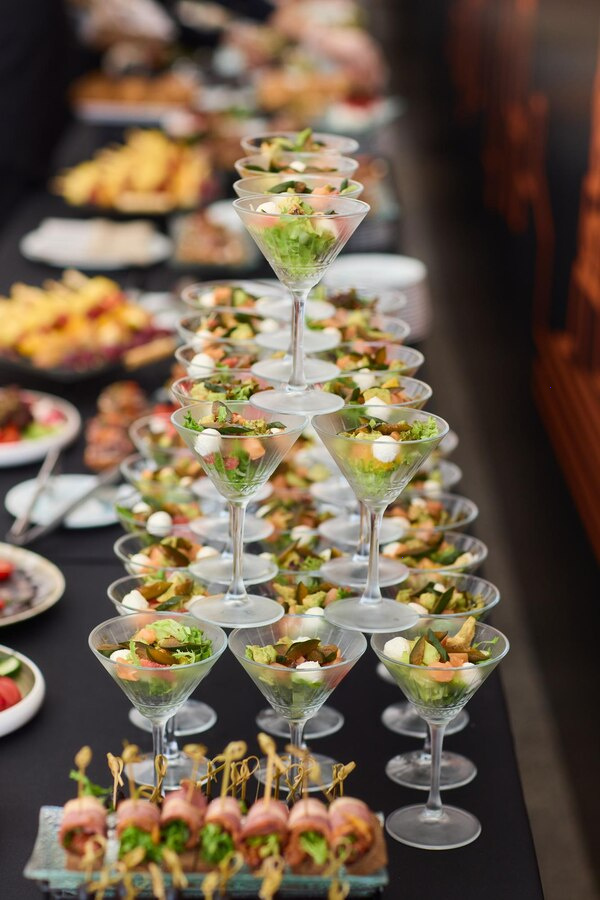
1. Hyper-seasonal British produce
Spring weddings lean into delicacy and freshness. Caterers highlight:
- Asparagus, peas, broad beans, Jersey Royals
- Spring lamb, often slow-roasted or served pink with herb crusts
- Soft herbs (chives, mint, parsley) and early salad leaves
Canapés might feature pea and mint arancini, mini tartlets with goat’s cheese and asparagus, or smoked trout blinis with spring herb crème fraîche.
2. Edible flowers and botanical notes
Edible blossoms are now common in English spring menus:
- Salads topped with violas, borage, and nasturtiums
- Floral-infused desserts—elderflower pannacotta, rose and raspberry Eton mess
- Botanical cocktails using elderflower, cucumber, and herbs
This creates a visual connection to the season’s blossom-filled gardens and countryside.
3. Light, fresh desserts
Spring couples favour lighter endings:
- Lemon and elderflower cakes, often with semi-naked or buttercream finishes
- Rhubarb in crumbles, tarts, or compotes
- Yogurt-based desserts with fresh berries rather than heavy creams
Summer: Outdoor Feasting and Abundance
1. Al fresco dining and “English garden party” style
In summer, many weddings centre on outdoor eating—marquees, tipis, barns, and walled gardens. Popular formats:
- Sharing platters of grilled vegetables, charcuterie, and British cheeses
- Large rustic salads with heritage tomatoes, burrata, broad beans
- Carved-at-the-table roasts or barbecued joints (beef sirloin, spatchcock chicken, whole fish)
The emphasis is on relaxed abundance rather than formal, plated formality.
2. Barbecue and live cooking stations
Interactive food is a major trend:
- Open-fire cooking: grilled lamb, whole sea bass, charred corn, flatbreads
- Slider bars (mini burgers with British beef, lamb, or plant-based patties)
- Taco-style stations with slow-cooked meats and seasonal veg salsas
Guests enjoy seeing food prepared in front of them, and it suits England’s growing festival-style wedding aesthetic.
3. Seasonal fruit as centrepiece
Peak English summer produce is heavily featured:
- Strawberries, raspberries, cherries, gooseberries, and currants
- Pavlovas, Eton mess bars, fruit tarts, and build-your-own trifle stations
- Ice cream trikes or gelato carts with flavours like Kentish strawberry, clotted cream, or honeycomb
Dessert tables often look like farmers’ market displays, packed with seasonal colour.
4. Lighter drinks and low-alcohol options
Summer bar trends include:
- Pimm’s, spritzes, and English sparkling wine
- Herb- and fruit-infused waters, shrubs, and kombuchas
- Lower-ABV cocktails using vermouth, cider, and sparkling softs
This reflects both warm-weather practicality and a broader move towards balanced drinking.
Autumn: Rustic Comfort and Harvest Themes
1. Harvest-led menus
Autumn weddings in England tap into a cosy, rustic mood:
- Root veg: carrots, parsnips, celeriac, beetroot
- Wild mushrooms, game (pheasant, venison), and slow-cooked beef or pork
- Barley, farro, and lentils for hearty salads and sides
Sharing-style main courses are common: braised beef shin served family-style, roasted squash with sage butter, or slow-cooked shoulder of lamb with autumn vegetables.
2. Earthy flavours and warm spices
The flavour profile shifts from bright and zesty to deep and comforting:
- Sage, thyme, rosemary, and bay in roasts and braises
- Toasted nuts and seeds in salads and desserts
- Subtle warming spices in soups (e.g., spiced pumpkin or carrot and coriander)
Many couples move away from very formal three-course menus to more relaxed “harvest feast” formats.
3. Elevated comfort desserts
The desserts mirror the season:
- Apple, pear, and plum crumbles with custard or clotted cream
- Sticky toffee pudding in mini or shared versions
- Caramel, toffee, and nut-based sweets, often as part of a dessert table
Cheeseboards featuring British artisan cheeses, chutneys, and oatcakes are especially popular at autumn receptions.
4. Warm cocktails and richer drinks
Drinks trends include:
- Mulled cider or spiced apple punch on arrival
- English red wines and fuller-bodied whites
- Darker spirits—whisky cocktails, spiced rum with ginger beer
Hot cocktail stations give guests a way to warm up at barn and countryside venues.
Winter: Intimate, Indulgent, and Atmospheric
1. Comfort-led, indulgent menus
Winter weddings in England often lean into richness:
- Slow braises (beef bourguignon, lamb shank, ox cheek)
- Rich gratins and dauphinoise potatoes
- Roasted root vegetables with honey and thyme
Presentation is more refined than pub comfort food, but the flavours are similar: hearty, satisfying, and warming.
2. Festive influences without feeling like Christmas dinner
While couples avoid replicating a Christmas roast, there are subtle festive touches:
- Turkey or guinea fowl with seasonal stuffing, but served in contemporary ways
- Cranberry relishes, chestnut purées, sprout tops or charred sprouts with pancetta
- Star anise, cinnamon, and clove in sauces, desserts, and drinks
Menus often use these flavours sparingly to evoke the season without becoming clichéd.
3. Rich desserts and alternative cakes
Winter dessert trends include:
- Dark chocolate fondants, salted caramel tarts, black forest-style cakes
- Cheese “wedding cakes” made from stacked wheels with winter accompaniments
- Dark fruit puddings and spiced poached pears
Couples increasingly choose smaller display cakes plus a range of traybakes, tarts, and puddings for variety.
4. Hot drinks bars and late-night snacks
To create a cosy atmosphere:
- Hot chocolate stations with whipped cream, marshmallows, and liqueurs
- Mulled wine, spiced cider, and hot toddies
- Late-night snacks like mini pies, sliders, or posh sausage rolls for guests staying on the dance floor
Cross-Season Trends Shaping English Wedding Catering
1. Local, sustainable, and “farm-to-fork” focus
Across all seasons, English couples are prioritising:
- Locally sourced meat, fish, and seasonal vegetables
- Relationships with regional farms, fisheries, and orchards
- Reduced food miles and clear provenance on menus
Many caterers now highlight suppliers by name on printed menus and websites.
2. Modern British with global accents
The backbone of many menus is modern British, but:
- Starters might feature Middle Eastern, Asian, or Mediterranean influences
- Sauces and sides incorporate miso, harissa, tahini, gochujang, or preserved lemons
- Plant-based dishes draw on international cuisines for interest and depth
Couples often pair a classic British main with more adventurous canapés and sides.
3. Plant-based and flexible menus
Vegan and vegetarian options have moved from afterthought to central features:
- Entirely plant-based wedding feasts, especially for urban and eco-conscious couples
- Vegetable-led main courses (whole-roasted cauliflower, mushroom wellingtons, squash “steaks”)
- Dairy-free desserts that use coconut, nut creams, or aquafaba
Caterers increasingly design menus to be easily adapted for gluten-free, dairy-free, and other dietary needs.
4. Sharing and grazing over strict formality
Across seasons, there’s a shift away from rigid three-course plated meals:
- Long tables with family-style sharing platters
- Grazing boards of charcuterie, cheeses, crudités, and dips
- Dessert stations and “sweet grazing tables” instead of individual plated desserts
This suits more relaxed, social weddings and mixed-age guest lists.
5. All-day food experiences
Catering is now seen as an all-day arc rather than a single meal:
- Pre-ceremony refreshments (coffee, pastries)
- Substantial canapés or grazing after the ceremony
- Main feast, followed by dessert tables
- Evening food—pizza trucks, bao buns, fish and chip vans, or toastie bars
This helps keep guests comfortable over the long timeline of a typical English wedding day.
6. Personalisation and storytelling
Menus increasingly reflect the couple’s story:
- Dishes inspired by where they met, come from, or have travelled
- Signature cocktails named after key moments or places
- Family recipes reinterpreted by professional caterers using seasonal English produce
Seasonality becomes the canvas, while personal details are the finishing brushstrokes.
Regional Influences Within England
While national trends are clear, regional identity plays a growing role:
- South West & Cotswolds: Emphasis on farmhouse-style feasts, local cheeses, cider, and lamb.
- South East & Home Counties: Vineyard weddings with English sparkling wine pairings and refined modern British menus.
- London & urban areas: High-concept tasting menus, fusion flavours, and innovative plant-based catering.
- North of England & Yorkshire: Hearty dishes, local game, and strong cheeseboard traditions, often in barn or country house venues.
- Coastal regions: Seasonal fish and seafood—crab, oysters, and day-boat catches, often served simply to showcase freshness.
Planning a Seasonal Menu in England
Couples planning a wedding in England are increasingly:
- Choosing a season first, then designing the menu around what’s naturally at its best.
- Asking caterers for sample “seasonal boards” rather than fixed packages.
- Balancing tradition—roasts, puddings, British cheeses—with modern service styles and dietary expectations.
Seasonal wedding catering in England has become about more than taste alone. It expresses values (sustainability, locality), creates atmosphere (from bright spring freshness to winter cosiness), and gives guests a tangible sense of time and place. As this focus deepens, wedding food is likely to become even more regional, more plant-led, and more personalised—while still rooted in the distinctive seasons of the English year.